
Malaysia’s Department of National Heritage awards a certificate to the Wuhan University team.
The archaeological team from Wuhan University (WHU) has been awarded the "Bujang Valley Site No 49" excavation license by Malaysia's Department of National Heritage, marking the first time in Malaysia's history that an excavation license has been granted to a foreign archaeological unit.
Bujang Valley, located in Malaysia's Kedah state, is one of the largest early port states and transnational trade hubs along the Maritime Silk Road, maintaining long-term, close exchanges with regions such as China and India.
Over 50 archaeological sites have been discovered in the area, with No 49 located on the eastern bank of the Batu Pahat River. The surface is scattered with numerous cut granite column bases and stone slabs, forming the pinnacle of the sacred spatial hierarchy of the Bujang Valley alongside surrounding sites.
A preliminary survey conducted in early 2024 indicated signs of human and natural damage in the area, necessitating systematic archaeological excavation and preservation efforts.
The WHU team had conducted comprehensive literature reviews and preliminary research, developing a detailed excavation plan that was reviewed and coordinated during an online meeting hosted by Malaysia's Department of National Heritage.
The team will collaborate with Malaysian universities to integrate historical documentation, field excavation, and digital technology, covering the entire process, from site investigation and excavation to preservation, exhibition, and utilization.
The aim is to reveal the significant historical role of the ancient Kedah region in the Maritime Silk Road, while also deepening academic exchange and talent development cooperation between China and Malaysia in cultural heritage.
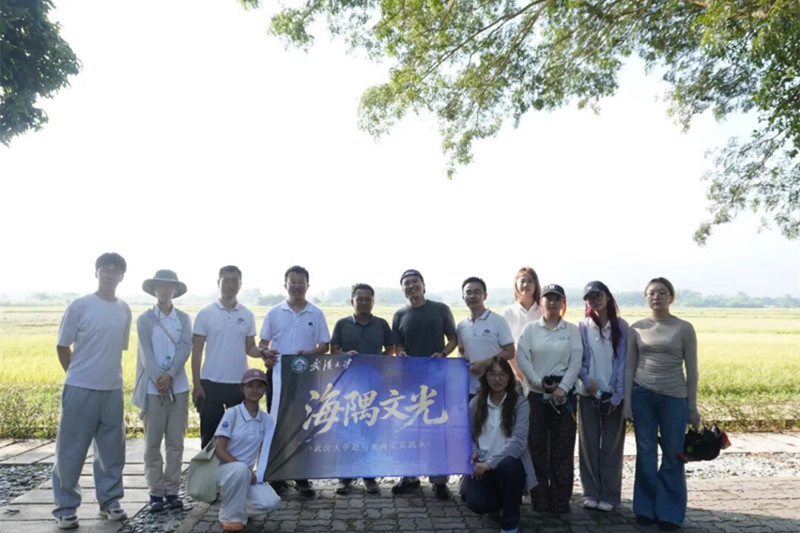
WHU team conducts an investigation with Malaysia’s Department of National Heritage.
 中文
中文