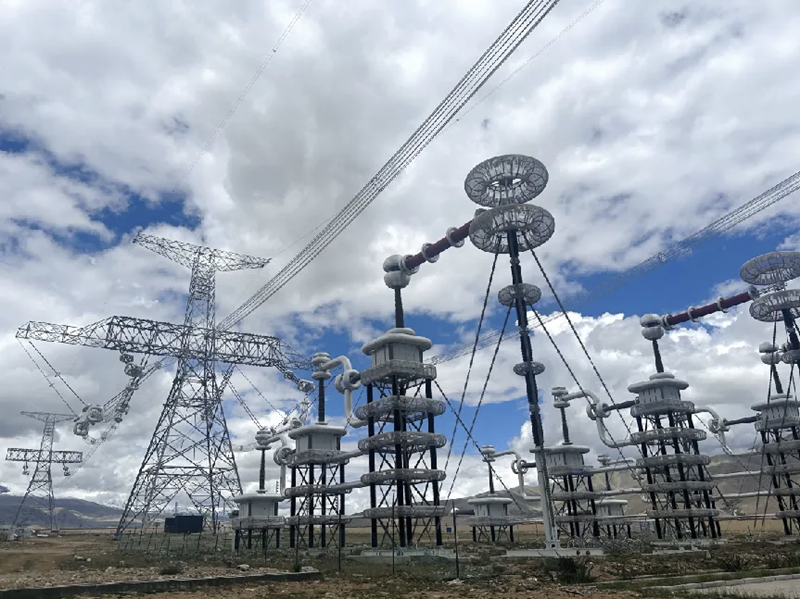
The scientific observation and research station for high-altitude electrical safety and electromagnetic environment in Yangbajain, Xizang.
Zhao Luxing, an alumnus of Wuhan University's School of Electrical Engineering and Automation, has made significant strides in high-altitude power transmission research. His journey began in 2002, when he enrolled as an undergraduate, leading him to address some of the most pressing challenges in electrical engineering.
Zhao pursued undergraduate and master's degrees at the university, immersing himself in cross-disciplinary courses and practical experiences such as the Gezhouba Dam power plant internship. These experiences equipped him with a strong foundation, enabling him to bridge theory and practice.
Guided by Professor Zhou Wenjun during his graduate studies, Zhao refined his research skills in the university's advanced high-voltage laboratory. His meticulous approach — from equipment operation to data analysis — prepared him for real-world engineering challenges. Zhao credits the university's people-oriented education system for fostering his innovative thinking.
Zhao joined the China Electric Power Research Institute in 2008, quickly proving his expertise. Within a year, he was appointed project leader at the State Grid's high-altitude testing base in Yangbajain, Xizang autonomous region. At 4,300 meters above sea level, the base posed unique challenges, including harsh weather and logistical difficulties.
A key contribution from Zhao came while studying audible noise from DC transmission lines in high-altitude areas. The industry standard, based on the Electric Power Research Institute's guideline, suggested a 1-decibel increase in noise for every 300 meters of altitude, necessitating costly six-bundle conductors for the Qinghai-Xizang DC project.
Zhao's team conducted thorough experiments, developing a more accurate altitude correction method for audible noise. Their findings showed the existing guideline was inaccurate, allowing the use of four-bundle conductors. This innovation ensured environmental compliance while reducing construction complexity and costs, saving over 50 million yuan ($7.13 million).
 中文
中文