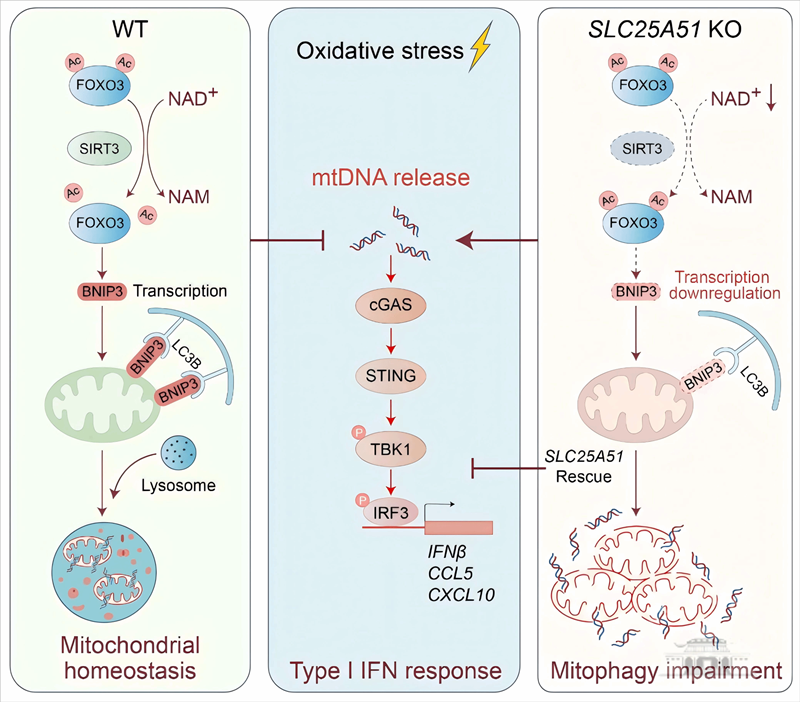
The mitochondrial NAD+ transporter SLC25A51 regulates mitophagy to suppress Type I interferon response mediated by mitochondrial DNA leakage.
A groundbreaking study by the research teams led by Professor Zhou Rongjia and Professor Cheng Hanhua from the College of Life Sciences at Wuhan University has been published in the prestigious international journal Autophagy.
The study uncovers a novel molecular mechanism by which mitochondrial NAD+ regulates mitophagy and maintains cellular homeostasis, offering new avenues for understanding autoimmune and inflammatory diseases.
The paper, Mitochondrial NAD+-mediated mitophagy alleviates type I interferon response to the cytosolic mitochondrial DNA, highlights the crucial role of mitochondrial NAD+ in controlling mitophagy and inflammatory responses. The research focused on the mitochondrial NAD+ transporter protein SLC25A51.
By constructing a series of gene knockout cell models and employing multiple molecular experimental techniques, the team analyzed how mitochondrial NAD+ influences mitophagy and inflammation.
Key findings from the study indicate that the absence of SLC25A51 leads to a significant reduction in mitochondrial NAD+ levels, which in turn inhibits the formation of mitophagosomes and their fusion with lysosomes, thereby reducing mitophagy flux.
This discovery elucidates the molecular link between NAD+ metabolism, autophagy, inflammation, and autoimmunity, providing a theoretical basis for further research into the mechanisms of autoimmune and inflammatory diseases and opening up new possibilities for targeted therapeutic interventions.
 中文
中文