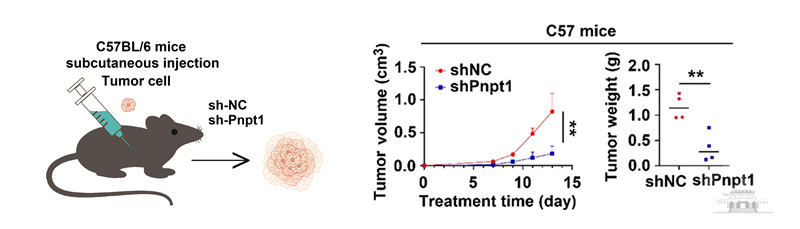
Silencing PNPT1 significantly inhibits tumor growth.
Professor Lan Ke's team at Wuhan University has unveiled a novel mechanism by which mitochondrial RNA (mtRNA)-derived danger signals play a crucial role in activating innate immunity and enhancing anti-tumor therapies.
The study, PNPT1-mtRNA axis mediates chemotherapy-induced immune signaling and can be targeted to overcome therapeutic resistance, published in Vita, identifies PNPT1 as a key regulatory element in this pathway, offering new approaches to overcome tumor resistance and improve responses to immunotherapy.
Researchers found that anti-tumor treatments, such as chemotherapy, can induce tumor cells to release immunogenic double-stranded mtRNA (mt-dsRNA). These signaling molecules activate RNA sensors in cells, thereby activating the downstream MAVS (also known as VISA) signaling pathway and enhancing antitumor immunity.
The team identified PNPT1 as a core inhibitory factor. PNPT1, a 3’-5’ exoribonuclease, was previously known only for its role in degrading mtRNA following mitochondrial damage.
This study expands the understanding of its function, demonstrating that PNPT1 is overexpressed in tumor tissues and plays a critical role as a "driver" of tumor immune evasion and resistance.
The team also explored clinical translation pathways and proposed a combined therapeutic approach of "PNPT1 inhibitors + BH3 mimetics,” which shows significant potential for clinical application.
This combined approach demonstrated high antitumor efficacy across various mouse solid tumor models without significant systemic toxicity, laying a crucial foundation for clinical translation.
 中文
中文