An interdisciplinary team at Wuhan University has achieved a breakthrough in the digital preservation of cultural heritage, with their latest research published in Nature Communications.
The study, Rejoining fragmented ancient bamboo slips with physics-driven deep learning, introduces WisePanda, a novel framework that offers a transformative approach to the intelligent reassembly of bamboo slip fragments and the broader reconstruction of ancient artifacts.
The reassembly of fragmented bamboo slips has been a labor-intensive and time-consuming task, hindered by the scarcity of matchable fragments needed to train deep learning models.
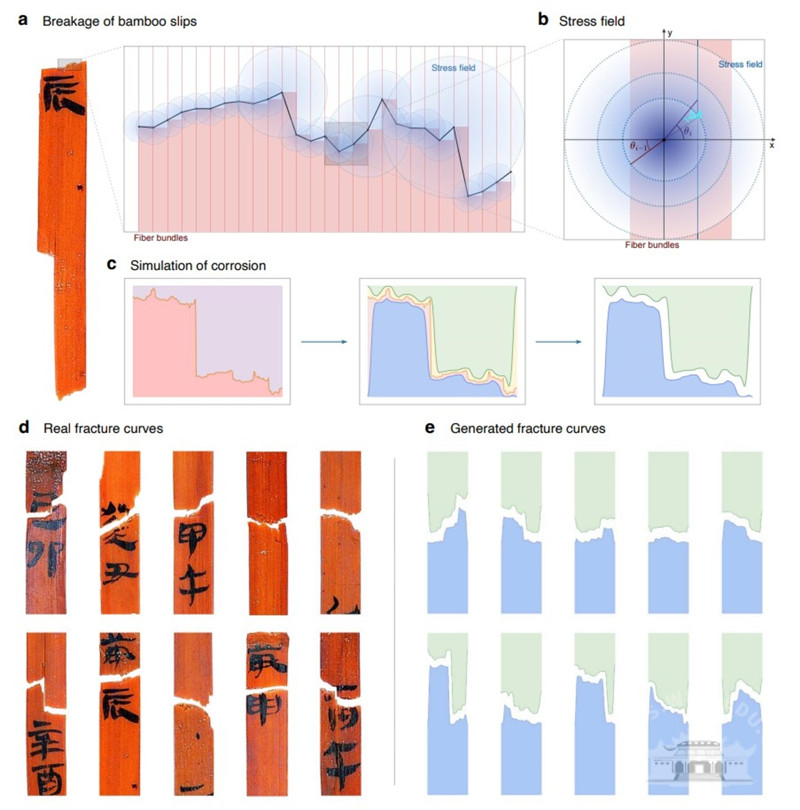
To address the challenge of insufficient paired training data, researchers have generated a substantial volume of training data with authentic physical characteristics by modeling the fracture mechanics of bamboo fiber structures under stress and simulating the differential corrosion and degradation patterns encountered in subterranean environments.
WisePanda employs a contrastive learning network to extract effective feature representations from synthetic data, distinguishing between matching and non-matching fragments.
This system provides ranked candidate suggestions, assisting bamboo slip experts in making informed reassembly decisions, and establishing a new paradigm for overcoming specific training data shortages through physics-driven mechanisms, with potential applications extending to the reassembly of pottery, metal artifacts, and other ancient relics.
Wuhan University remains dedicated to fostering interdisciplinary research, promoting the integration and innovative collaboration between artificial intelligence and the humanities and social sciences.
This achievement is the result of collaborative efforts involving the Artificial Intelligence Institute, the School of Computer Science, and the Bamboo and Silk Research Center.
 中文
中文