Wuhan University's Professor You Bei and his international team have made significant strides in black hole accretion, with their latest findings on the reverberation lags observed in hard X-rays from an accreting stellar-mass black hole published in Nature Communications.
The paper, Reverberation lags viewed in hard X-rays from an accreting stellar-mass black hole, continues the team's previous studies on the black hole X-ray binary MAXI J1820+070, which were featured in Nature Communications in 2021 and Science in 2023.
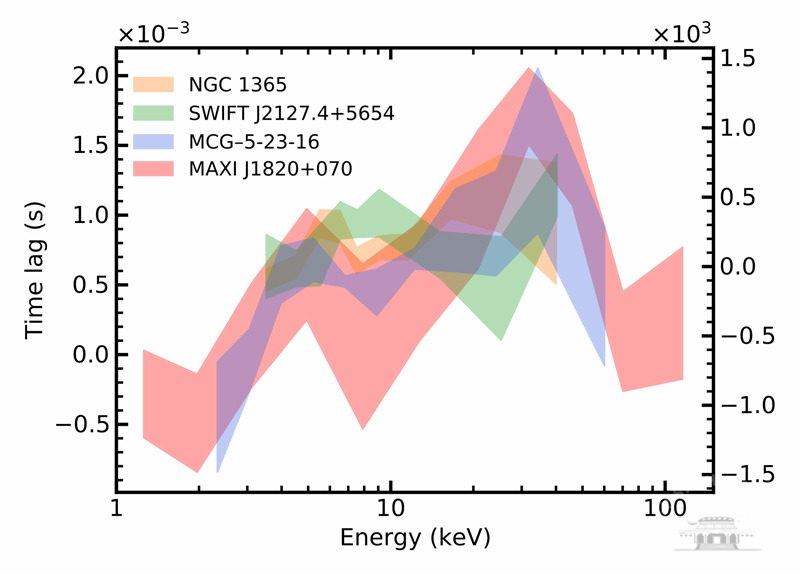
Utilizing the capabilities of China's Insight-HXMT satellite, the team captured, for the first time, the Compton hump reverberation lag at hard X-ray wavelengths (up to 150 keV), with the peak around 30 keV.
They also detected the iron K line reverberation signal at approximately 6.4 keV, providing direct observational evidence of the corona's geometric structure in black hole accretion flows.
The research compared the reverberation lag spectra of three active galactic nuclei (AGN) with supermassive black holes, revealing a linear scaling with black hole mass, consistent with the prevailing view that AGNs are mass-scaled versions of X-ray binaries (XRBs).
This finding provides compelling evidence that both stellar-mass and supermassive black holes follow the same universal accretion processes, representing the first successful reverberation mapping in the hard X-ray band for a stellar-mass black hole and confirming the mass-scaling universality of the accretion flow geometry between AGNs and X-ray binaries.
 中文
中文