A study led by Professor Li Erwei from Wuhan University and teams from Harvard Medical School and the University of Michigan, has been published in Cell Metabolism.
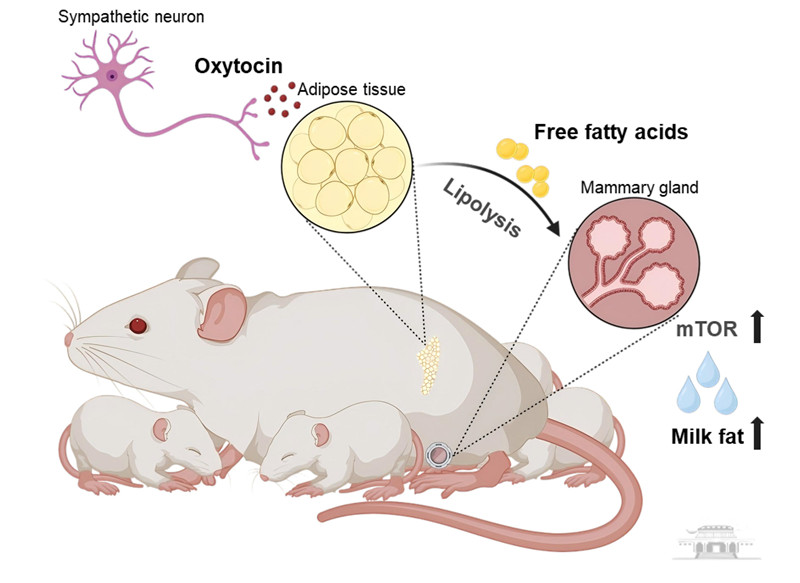
The paper, Oxytocin signaling in adipocytes is required for normal milk fat production, explores the crucial role of oxytocin-induced lipolysis in milk lipid production and the subsequent growth and development of offspring.
The research revealed that female mice with adipocyte-specific deletion of the oxytocin receptor (OxtrΔAd mice) exhibited slower weight gain in their offspring before weaning and a noticeable decrease in neonatal survival rates compared to wild-type controls.
This phenotype indicates that the absence of oxytocin signaling in adipocytes adversely affects offspring growth during lactation.
The study identified a specific subset of sympathetic neurons that innervate mammary tissue as a key source of local oxytocin. In OxtrΔAd mice, the composition of milk lipids was disrupted, and the total lipid content was significantly reduced, which was identified as the primary cause of the restricted growth phenotype in the offspring.
The researchers also observed similar growth restrictions in offspring during lactation, suggesting that a general deficiency in lipolysis in mother mice can limit offspring growth during the nursing period.
This study highlights the regulatory role of the adipocyte-mammary epithelial cell axis in active lactation metabolism, mediated by oxytocin from sympathetic neurons.
 中文
中文