Professor Dong Weiguo's team at Renmin Hospital of Wuhan University has published their latest study in Autophagy, revealing a novel mechanism by which high-fat diets exacerbate experimental colitis through the STAT3-TFEB axis.
The study, High-Fat Diet Exacerbates Experimental Colitis by Inhibiting Lysosomal Function via the STAT3-TFEB Axis, sheds light on the intricate links between diet and inflammatory bowel disease (IBD).
Their results demonstrate that high-fat diets activate STAT3 in intestinal epithelial cells, leading to dual inhibition of TFEB, the master regulator of lysosomal function. Activated STAT3 binds directly to the TFEB promoter, suppressing its transcription, while also promoting MTORC1 activation, enhancing TFEB phosphorylation at the S211 site, and blocking its nuclear translocation.
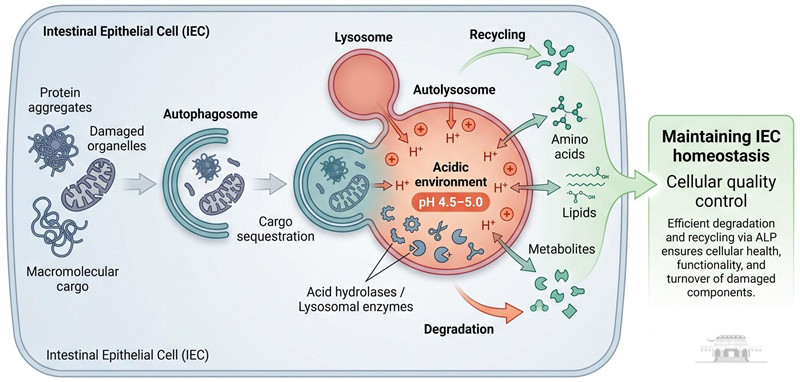
This combined inhibition results in lysosomal membrane permeabilization, loss of the acidic environment, and degradation dysfunction, ultimately causing intestinal barrier damage and exacerbating colitis.
Intestinal epithelial-specific deletion of Stat3 or pharmacological activation of TFEB effectively restored lysosomal function, repaired the intestinal barrier, and alleviated colitis symptoms.
This discovery provides new theoretical insights into the pathogenesis of diet-related IBD and points toward the development of targeted therapeutic approaches focused on the STAT3-TFEB axis.
 中文
中文