A team led by Professor Dong Weiguo from the Renmin Hospital of Wuhan University has published new findings in Gut Microbes, unveiling a novel mechanism by which the bacterium Fusobacterium nucleatum (Fn) exacerbates inflammatory bowel disease (IBD).
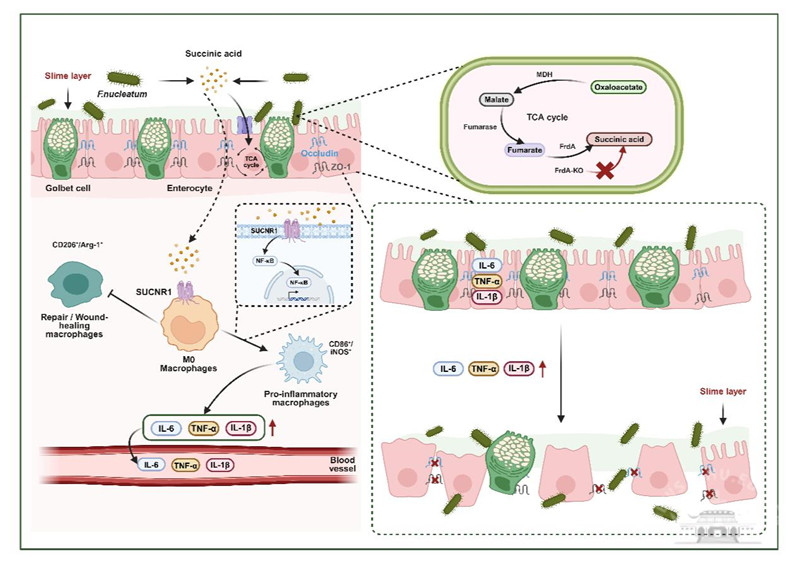
The study, Fusobacterium nucleatum-derived succinic acid aggravates colitis by triggering macrophage pro-inflammatory phenotypic transformation via SUCNR1/NF-κB Axis, highlights the role of succinic acid, a metabolite produced by Fn, in promoting inflammation.
Fn, an opportunistic pathogen commonly found in the oral cavity and gastrointestinal tract, has been linked to IBD and colorectal cancer, yet the molecular mechanisms by which it modulates host inflammatory responses remain poorly understood.
The team explored the role of microbe-derived metabolites in inflammation regulation, finding a significant increase in Fn abundance in the feces of IBD patients and revealing a correlation between elevated Fn levels and increased macrophage infiltration with a pro-inflammatory phenotype.
They confirmed that Fn colonization worsens intestinal inflammation, damages the mucosal barrier, and promotes the transformation of macrophages to a pro-inflammatory state.
Mechanistic studies revealed that Fn-derived succinic acid acts on the succinate receptor SUCNR1 on macrophages, activating the NF-κB signaling pathway and promoting a pro-inflammatory macrophage phenotype, thereby amplifying intestinal inflammation.
Further experiments showed that Fn strains lacking the ability to synthesize succinic acid (frdA-KO Fn) had a reduced capacity to induce macrophage inflammatory activation and exacerbate colitis, while supplementation with exogenous succinic acid restored these effects.
This study expands the team's research framework in the "gut microbiota-host metabolism-inflammatory signaling" field and offers new theoretical insights to inform the development of precision diagnostic and therapeutic approaches for IBD.
 中文
中文