A study led by Professor Yan Wei and his team at Wuhan University’s College of Life Sciences has unveiled a novel mechanism by which guanine promotes acute lung injury in sepsis.
The research, Guanine promotes acute lung injury by repressing H3K27me3 in sepsis, has been published in the journal Protein & Cell.
Sepsis, a life-threatening condition triggered by an infection that leads to an imbalanced immune response, continues to have a high mortality rate. The lungs, often one of the first organs affected, are particularly susceptible to developing acute lung injury (ALI) and even acute respiratory distress syndrome (ARDS).
While small extracellular vesicles (sEVs) mediate intercellular communication by carrying proteins and nucleic acids, their role in sepsis-induced acute lung injury has remained unclear.
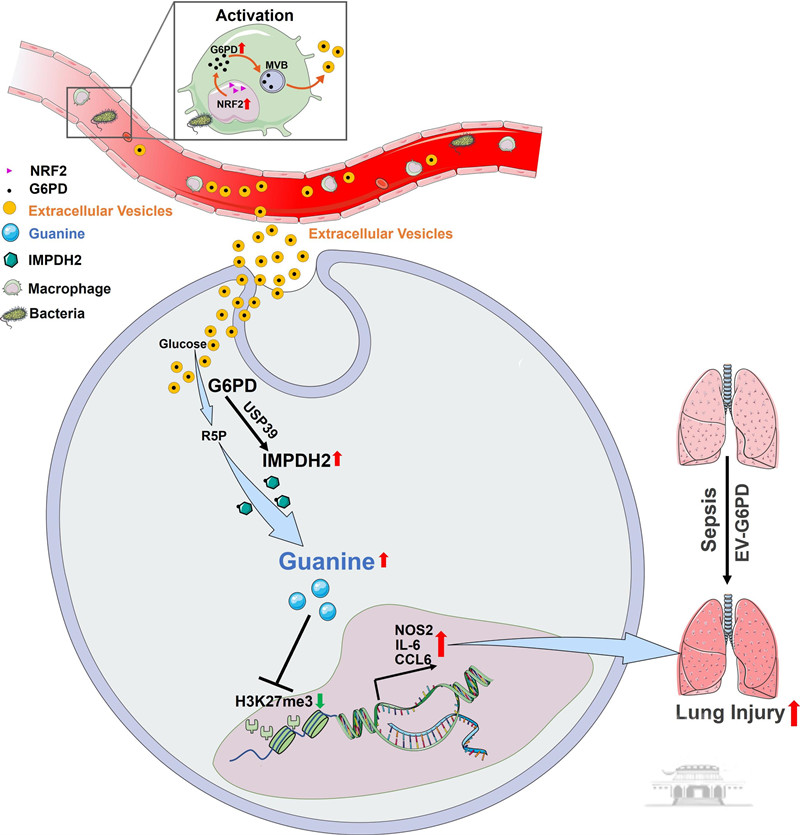
The study shows that after bacterial infection in sepsis patients, peripheral blood macrophages secrete sEVs enriched in glucose-6-phosphate dehydrogenase (G6PD). Alveolar macrophages then absorb these vesicles from the bloodstream.
The enriched G6PD activates the pentose phosphate pathway (PPP), recruiting the deubiquitinating enzyme USP39 to stabilize the rate-limiting enzyme of purine synthesis, IMPDH2, thereby increasing guanine synthesis.
Guanine accumulation inhibits the H3K27me3 modification signal, lifting transcriptional repression of pro-inflammatory genes such as Nos2, Ccl6, and Il6. This activation triggers an inflammatory response in alveolar macrophages, causing lung tissue damage.
 中文
中文